
Seed Blends for Small Parrots
Tax included.
The long-awaited Biodiversity Bird Blends Seed Mix is finally here!
Shop the Seed Blend for Medium to Large Parrots
This formula was co-developed by Dr. Jason Crean (avian biologist) and Tiffany Park (Biodiversity Bird Blends staff member with a background in biology and a breeder who strongly advocates whole-food nutrition).
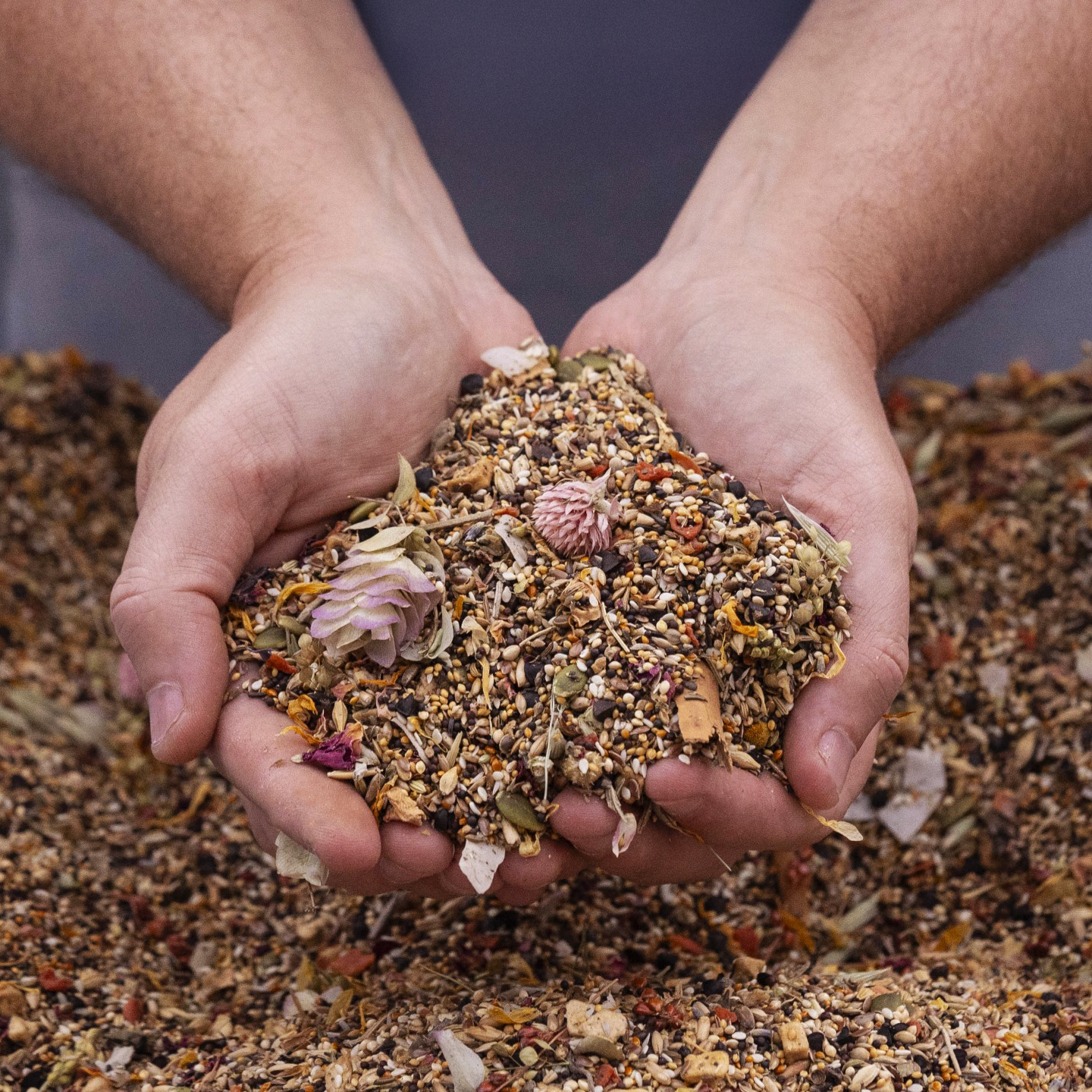
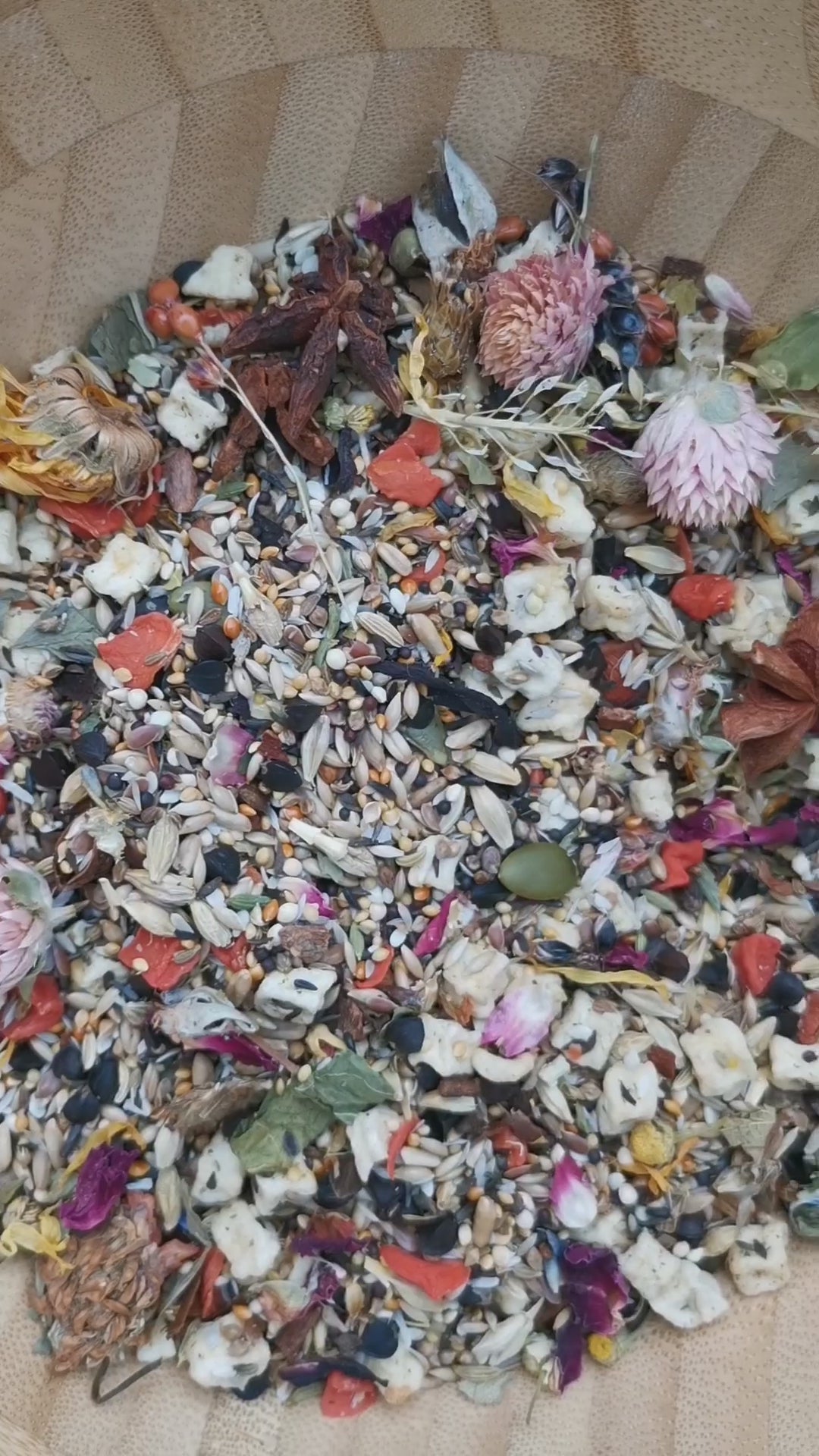
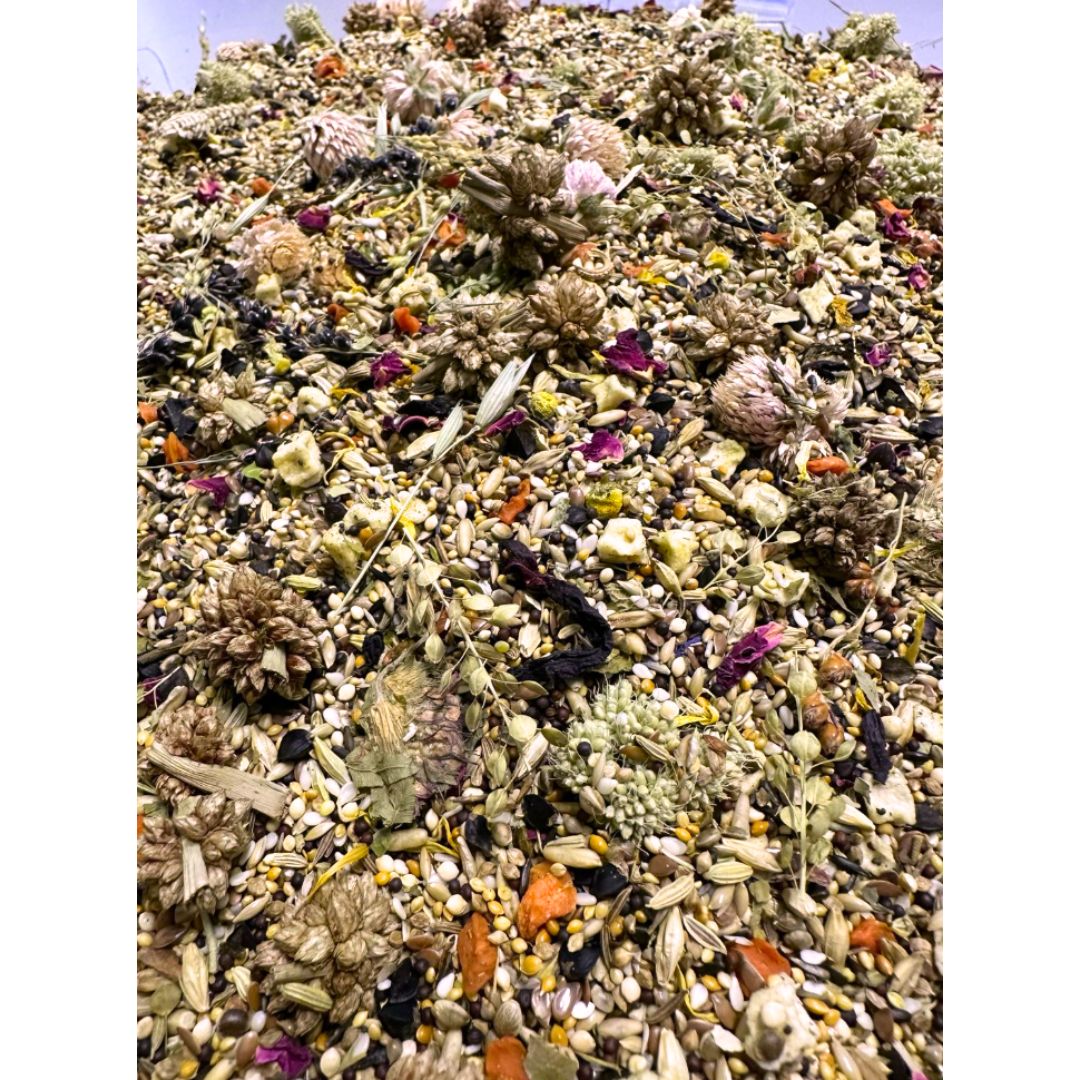
This blend is formulated with a variety of natural ingredients, including seeds, grains, cereals, nuts, vegetables, fruits, herbs, spices, flowers, leaves, and roots, and is balanced specifically for small to medium parrots.
Biodiversity Bird Blends is dedicated to improving the lives of the animals we keep through whole food nutrition. We rely on the decades of science that has shown us the value of biological compounds in whole food items and the dangers of processed foods. We also rely on experts in avian nutrition who run our formulations and create our innovative products to ensure their safety and benefits for all animals. As both Dr. Jason and Dr. Karen have long said, we want our animals to THRIVE, not just survive.
Product Overview
Species
Suitable for Parrots, Parakeets, and Hamsters.
Not recommended for Lory, Lorikeets, Rabbits, Guinea pigs, or Sugar gliders.
Feeding Instructions
This product is ready to serve as soon as you open the bag. You can feed the seeds dry.
When feeding a whole-food-based diet, offer this product as 10–15% of the total diet.

Please mix all the items listed in the Dietary Ratio Chart and feed according to the Recommended Feeding Amounts:
- Small parrots: 1 tablespoon
- Medium parrots: 2–3 tablespoons
- Large parrots: 3–4 tablespoons
These amounts are designed so that what you offer is what your bird consumes. If your bird finishes everything, you may offer a bit more while monitoring its condition. Feeding “10% of body weight” isn’t harmful, but it isn’t our recommended approach.
This Dietary Ratio Chart and Feeding Amount Guide was developed by Biodiversity Bird Blends in collaboration with avian biologists. Because we consider this approach optimal for companion birds, we encourage you to review and adjust your bird’s diet to align with these guidelines.
Ingredients
Ingredients:Millet blend (German millet, Japanese millet, Siberian millet, Red millet, White millet), Canary grass seed*, Buckwheat, Oats*, Barley*, Apple dices*, Carrot dices, Milk thistle seed*, Thistle, Flax*, Rape, Sesame*, Anise, White lettuce, Fennel*, Caraway, Thyme leaf*, Rosemary leaf*, Peppermint*, Sage*, Oregano*, Dandelion Root*, Red Clover*, Rama holy basil (tulsi)*, Hibiscus*, Red rose bud/petals*, Calendula*, Cornflowers*, Jasmine flower*, Lavender flower*, Chamomile*, Red clover*, Ceylon cinnamon
* Also includes whole grain and seed heads like oats, wheat, canary grass, flax seed, and more like amaranth and oregano flower.
Benefit of this product
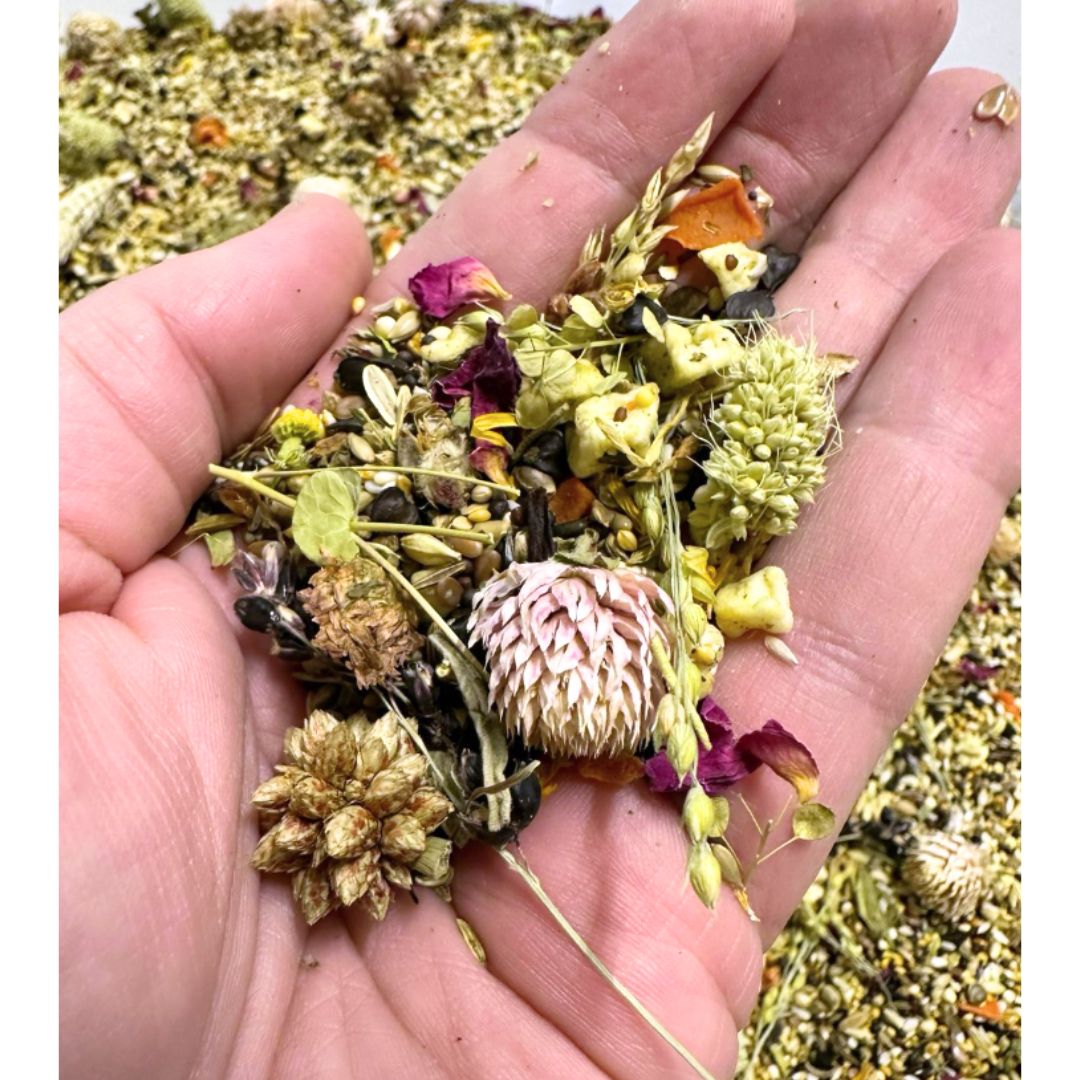
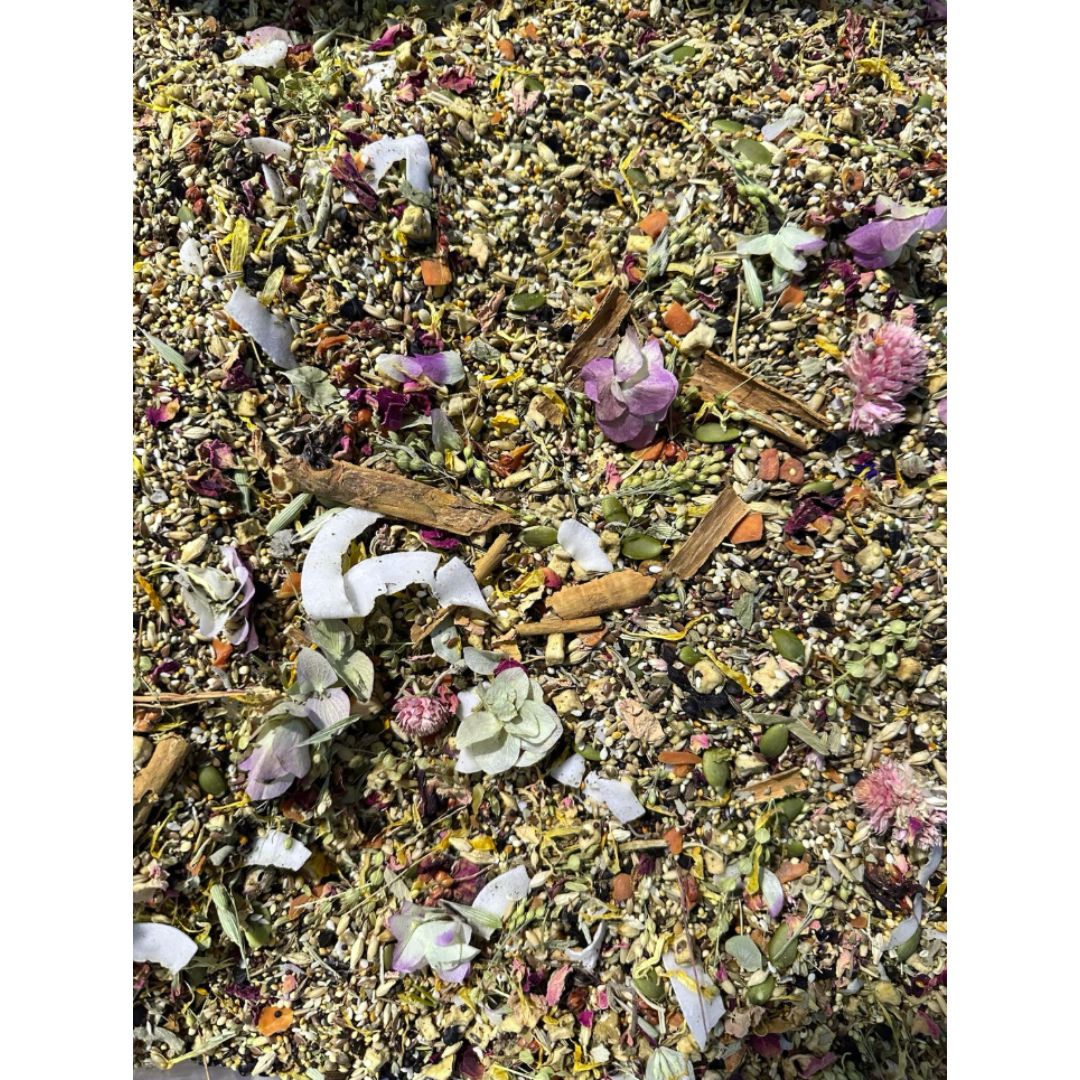
- Designed not only for eating but also with foraging in mind (see images)
- Recipe formulated based on biological expertise
- A healthy mix of multiple whole-food ingredients
- Includes seeds, grains, cereals, nuts, vegetables, fruits, herbs, spices, flowers, leaves, and roots
- Developed by avian biologists who calculated safe ingredients and proper proportions for birds
- Contains ingredients in various sizes, ideal for enrichment and foraging
- A Japan-exclusive special recipe (different from the U.S. version)
Reported benefits of whole food items in this blend
Millet - Starchy, protein-rich grains that are a source of phosphorus, magnesium, and calcium
Canary grass seed - Rich in protein, fiber and essential vitamin and minerals
Buckwheat -Rich source of vitamin A, vitamin B complexes, and vitamins C and E
Barley - Source of potassium, folate, iron, and vitamin B-6 content
Apple - Good source of fiber, vitamin C, and antioxidants
Carrot - Great source of Vitamin A and beta-carotene
Milk thistle seed - Supports liver function and health
Thyme leaf - Rich in Vitamins A and C and possesses anti-inflammatory and antimicrobial properties
Rosemary leaf - Source of iron, calcium, and vitamin B6
Peppermint - Possesses significant antimicrobial and antiviral properties, strong antioxidant and antitumor actions, and some antiallergenic potential
Sage - Leaf rich in vitamins A, K, and C
Oregano - Possesses compounds that possess anti-inflammatory, antioxidant, and antimicrobial properties
Dandelion Root - Contains taraxasterol, a compound known for having significant antioxidant properties that combat inflammation as well as soluble fiber that supports the gut microbiome
Rama holy basil (tulsi) - Leaf rich in Vitamins A, C and K and minerals like calcium, magnesium, phosphorus, iron and potassium
Hibiscus - Possesses compounds like polyphenols, including anthocyanin, which have anti-inflammatory properties and support the cardiovascular system
Red rose - Rich in vitamins A and E and powerful antioxidants
Calendula - Has antifungal, anti-inflammatory, and antibacterial properties as well as being rich in carotenes
Cornflowers - Supports the liver’s ability to detoxify and contains antioxidants that support healing and digestion
Jasmine flower - Rich in antioxidants including flavonoids, catechins, alkaloids, phenols, and proteins
Lavender flower - Known to have anti-inflammatory, antioxidant, and antimicrobial effects as well as calming the nervous and digestive systems
Chamomile - Rich in antioxidants and known to be a nervous and digestive relaxant that has been used to treat various gastrointestinal issues
Red clover - Source of minerals like calcium, chromium, magnesium, phosphorus, and potassium, as well as vitamins like niacin, thiamine, and vitamin C
Ceylon cinnamon - Has anti-inflammatory, antioxidant, and antimicrobial effects
What are Whole Foods?
In bird nutrition, “whole foods” are ingredients that wild birds could obtain in nature—fresh vegetables and fruits, seeds, nuts, herbs, coconut, edible flowers, insects, and items that are soaked or sprouted. In short, foods you can recognize at a glance.
With the exception of processed products such as pellets, supplements, and bird cookies, most of these are considered whole foods. (Seeds count as whole foods, too.)
Best-By Date/Storage Instruction
Oct 2026
Store in a cool, dry place at room temperature, sealed tightly.
Once opened, please use as soon as possible regardless of the best-by date.
Caution
In the United States, the Food and Drug Administration (FDA) sets maximum permissible levels of insect fragments in foods. These levels vary depending on the type of food and the manufacturing process. Since this product is pesticide-free and additive-free, the possibility of insects being present cannot be completely ruled out. Insects attached to herbs are considered a source of animal protein and are not harmful to birds; however, if you are concerned, please remove them before feeding. Please note that returns or exchanges cannot be accepted due to the presence of insects.
Unauthorized use of images or text from this site, including screenshots or reproductions, is strictly prohibited.
This site’s text is automatically generated by a translation tool and may contain awkward phrasing. Thank you for your understanding.