Al momento è disponibile solo in inglese. Se il numero di visite aumenterà, pubblicheremo i contenuti anche in altre lingue. Saremmo molto felici se volessi condividerci sui tuoi social.
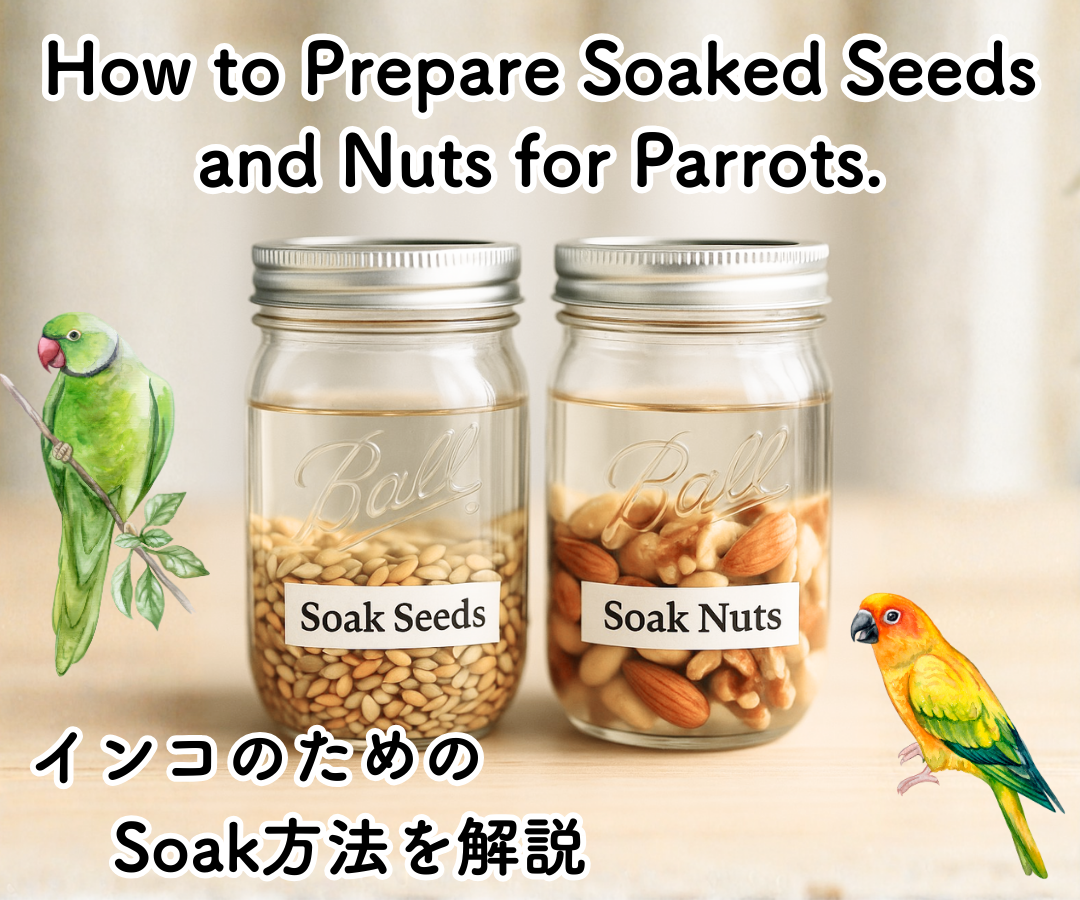
It refers to seeds, legumes, or nuts that have been soaked in water to rehydrate them.
This step is essential before allowing seeds to sprout.
It is the stage right before a plant begins its biological activity, and even at this stage alone, many nutritional changes begin to occur.
Compared to dry seeds, soaked seeds become softer and much easier for birds to eat.
Soaking also helps nutrients become more bioavailable, meaning the body can absorb them more easily.
In other words, soaked seeds are easier to digest and allow birds to use nutrients more efficiently, which is why they are recommended for chicks, sick birds, and older birds.
This page explains how to prepare soaked seeds and mixed nuts based on the items we sell at our store.
Why is soaking recommended?
Here are some of the main benefits of soaking.
• It reduces antinutrients, which makes the food easier to digest
• It puts less stress on the digestive system and is suitable even for animals with sensitive stomachs
• Because the food absorbs water, it becomes easier to digest
• Nutrients are considered to be more readily absorbed
• It does not draw moisture from the body, which reduces strain on the kidneys and liver
• Mineral absorption is improved
• Birds often show better appetite and interest in the food
• It helps food move smoothly through the digestive tract
• Because soaked food is soft, it is suitable for birds with small beaks
• Feeding it to chicks can help support the development of a strong immune system
• Older birds can obtain more nutrition even when eating smaller amounts
• Since soaked foods contain moisture, they do not dehydrate the body, reducing overall physical stress
• In the case of nuts, soaking helps prevent the oils from oxidizing, making them safer and easier to digest
Soaking transforms seeds and nuts into something entirely different from their dry versions. It becomes a far healthier food even with this one step alone. There are many more benefits, but there are too many to list here.
Beyond nutrition, there is another important reason soaking is so well suited for birds. This is the same concept as sprouting.
Aside from nutrition, the main reason is that they are the most suitable form of food for birds.
Did you know that wild birds rarely eat completely dry seeds (reference)? What most wild birds actually eat are seeds that contain moisture from rain or morning dew. They commonly consume damp seeds found on the ground, seeds that have just started to germinate, and moist roots that they dig up.
In captivity, birds are often fed fully dried seeds, but this is not something they frequently encounter in the wild. The same goes for vegetables, fruits, flowers, leaves, nuts, and insects. They eat many types of foods, but usually in their fresh and hydrated form.
Because companion birds are not domesticated and their bodies remain similar to those of their wild counterparts, we strongly recommend providing food that resembles what they would eat in nature (reference).
Note: Domestication refers to genetic and breeding changes, not simply being kept as a pet. Details can be found in the reference.
About Antinutrients
One of the most important points to understand about soak is the reduction of antinutrients.
Soaked seeds alone do not activate much enzymatic activity.
The most well-known antinutrient is phytic acid. In simple terms, antinutrients are “protective barriers” that seeds naturally contain, and they interfere with the absorption of nutrients.
Antinutrients themselves are not harmful, but when they are present, they can reduce the absorption of certain nutrients such as calcium and iron. Because birds have very small stomachs, it is healthier to provide food that is more easily absorbed, allowing them to feel full while receiving a higher level of nutrition.
By soaking seeds for an appropriate amount of time, these antinutrients can be reduced. They cannot be completely removed, but they can be significantly lowered.
Many studies show that soaking can reduce phytic acid (an antinutrient) by approximately 20 to 60 %. Soaking decreases antinutrients even further, but soaking alone still provides a substantial reduction and is much easier to prepare.
Even if you feed the same amount of dried seeds and soaked seeds, the body will absorb nutrients very differently. For this reason, many bird owners prefer to offer soaked seeds as a healthier, more nutritious option.
This is a simplified explanation. The exact effects differ depending on the type of seed, so if you are interested, I encourage you to look further into the details yourself.
What you will need
・Jar or other container
・Strainer
・GSE (Grapefruit Seed Extract)
・Soak seeds or mixed nuts

Items PEGO uses (shown in the video)
Jar: Ball® Mason Jars & Lids, Wide Mouth 16 oz
Please use containers made from safe materials such as BPA free plastic or glass.
Strainer: stainless steel mesh
You can also use a food grade mesh cloth like the one shown in the photo. It is used like a colander when draining water from the jar.
GSE: NutriBiotic
You do not have to use it, but using GSE provides extra peace of mind.
BPA is a chemical used in some plastics. Small amounts can potentially leach into food and may interfere with hormone function, so we strongly recommend using containers that are BPA free.
GSE stands for Grapefruit Seed Extract. It is known for having strong antibacterial and antifungal properties.
How to Soaked Seeds
繁體中文字幕目前正在準備中。
How to Prepare Soaked Seeds
-
Place one feeding portion of seeds into a container.
-
Rinse the seeds under running tap water to remove any dirt.
-
Rinse several times until the seeds are clean, then drain the water.
-
Add clean water to the container, using at least three times the volume of the seeds.
-
Add a few drops of GSE, about 0.05 percent.
-
Leave the seeds at room temperature or in the refrigerator for 6 to 8 hours to soak.
If you plan to sprout them afterward, do not refrigerate during the soaking stage. -
When the time is up, drain the soaking water.
-
Rinse the seeds thoroughly under running tap water.
-
Drain the water and rinse again under running water. Repeat this two or three times.
-
Once the seeds are clean, drain the water completely.
-
Serve to your bird.
You can feed soaked seeds approximately eight hours after starting the preparation.
The ideal soaking time varies depending on the type of seed, but even if a seed typically requires eight hours, it is still safe to feed after soaking for only three hours. These seeds are originally edible in their dry form, so there is no harm. However, for maximum nutritional benefit, it is best to soak each seed for its recommended duration.
A complete table of soaking times for each seed type is available for free here.
If your bird does not like wet foods, you can lightly pat the seeds dry with a paper towel before serving. Please adjust according to your bird’s preference.
Room temperature is recommended during soaking, but refrigeration is also acceptable.
How to Soaked Nuts
繁體中文字幕目前正在準備中。
-
Place one feeding portion of mixed nuts into a container.
(In the video, almonds and walnuts are used.) -
Rinse the nuts under running tap water to remove any dirt.
-
Rinse several times until the nuts are clean, then drain the water.
-
Add clean water to the container, using at least three times the volume of the nuts.
-
Add a few drops of GSE, about 0.05 percent.
-
Place the container in the refrigerator and soak for 6 to 8 hours.
-
After 8 hours, discard the soaking water.
The water will appear cloudy because dirt, fats, and enzyme inhibitors such as phytic acid have leached out. This water is not drinkable, so please discard it. -
Rinse the nuts thoroughly under running tap water. Repeat this two or three times.
-
Once the nuts are clean, they are ready to serve to your bird.
You may feed the nuts immediately after draining the water, or if your bird does not like wet foods, you can lightly pat them dry with a paper towel. Please adjust according to your bird’s preference.
The main difference from soaked seeds is that nuts should be soaked in the refrigerator.
Species and Feeding Amount
Species
Soaked seeds can be offered to a wide range of birds, from finches to large parrots.
They are not suitable for lories or lorikeets.
Because soaked seeds are easier to digest and nutrients are absorbed more efficiently than in their dry form, they are recommended for birds with sensitive stomachs or birds that have difficulty eating hard foods.
Feeding Amount
We recommend offering soaked seeds as about 10 to 15 % of the total daily food portion.
They can be fed every day. You may offer them at any time of day, but we recommend serving them in the morning.

Feeding Duration
Please discard soak after about 10 to 12 hours.
It is perfectly fine to offer them in the morning and replace them in the late afternoon.
You may have heard people say that soaked seeds or sprouts must be thrown away within two hours because harmful bacteria will grow quickly. However, bacteria that pose a real health risk do not reach dangerous levels within just half a day. soaked seeds are also still alive, so their growth does not stop the moment they are placed in the food dish, and they do not become harmful plants within a few hours.
If you are still concerned, you may discard them after six to eight hours.
However, unless your birds are kept in a completely sterile environment, there is no need to worry excessively.
There is a saying often heard in discussions about soaked seeds, sprouts, and microgreens:
People sometimes fear small disadvantages and end up missing out on much bigger benefits.
Climate Considerations
One of the most common questions we receive is, “My country is very hot and humid, so I am worried about soaking.”
High heat and humidity are not ideal for sprouting, but it is usually not as risky as people fear.
For reference, here are the average conditions for Florida in 2025.
With proper technique, soaking, sprouting, and growing microgreens in Florida can be done safely without any issues.
The values above are general guidelines.
If you are soaking indoors with air conditioning and the room temperature stays below 28 ℃(82℉) Celsius, and if your bird is comfortable in that environment, sprouting is not a problem.
Outdoor soaking is not recommended.
If your indoor environment stays above 30 ℃(86℉) Celsius or humidity exceeds 70 %, it is also not ideal for your bird’s health. In that case, please adjust the environment using dehumidifiers or fans to improve air circulation.
Just as important as temperature and humidity is ensuring proper airflow and using clean containers. These factors greatly reduce the risk of spoilage.
Some people believe soaking should only be done in cooler seasons, but for the health of your bird, we encourage offering soak throughout the entire year when conditions are managed properly.
Storage Instructions
You can make a larger batch and store the extra soaked seeds in the refrigerator.
However, whenever possible, freshly prepared soaked seeds are best because birds tend to eat them more eagerly and they are safer from a hygiene standpoint.
Refrigerator Storage
Place the portion you plan to store back into the soaking jar.
Add a few drops of GSE and let it sit at room temperature for ten minutes so the GSE can penetrate the seeds.
Do not rinse it off.
Drain the water thoroughly, then transfer the soaked seeds to an airtight container and refrigerate.
When feeding, rinse well with clean water just before serving.
Although soaked seeds can generally be kept for up to one week, based on our experience, using them within three days after refrigeration is recommended.
Freezer Storage
Drain the soaked seeds thoroughly and place them in an airtight container before freezing.
There is no need to rinse them again before serving.
Do not thaw them using a microwave or any kind of heat.
Soaked seeds are said to keep for about three to four weeks in the freezer, but because we have not frozen them ourselves, please judge the condition of the soaked seeds before feeding.
Whenever possible, use them as soon as you can.
FAQ
Sliminess on Soaked Seeds
Many people throw soaked seeds away as soon as they feel any sliminess, but a slimy texture does not always mean spoilage. Some seeds naturally become slimy when they absorb water. For example, chia seeds turn gel-like when hydrated, and okra becomes sticky when cut.
Seeds high in polysaccharides often become slimy, which is normal. Please determine whether the sliminess is natural or caused by spoilage.
How to Tell if Soaked Seeds Are Spoiled
The easiest indicators are smell and color.
Even if the soaked seeds feel slimy, they are usually safe if there is no foul odor.
If you notice discoloration, it may indicate spoilage, so remove those pieces.
If there is both an off smell and discoloration along with sliminess, discard them.
The Seeds Did Not Soak Properly
Because seeds are natural products, there can always be variations. However, seeds sold specifically for sprouting have passed germination testing, so their performance tends to be reliable. If your soaking results are inconsistent, review your process and try adjusting your method.
Points to Review
• Increase the number of times you rinse
• Check that it is not too cold or too hot
• Place the jar in a dark area
• Ensure proper air circulation
• Use GSE
• Confirm that your soaking time is appropriate
• Make sure the seeds are properly drained during resting periods
Why Do I Need Sprouting-Specific Seeds?
The biggest difference between regular seeds and sprouting seeds is safety testing. Sprouting seeds are tested for common foodborne pathogens such as Salmonella, E. coli, and Listeria, and their ability to sprout is verified.
Sprouts and microgreens for human consumption are also recommended to be grown from sprouting-specific seeds. This guidance is based on FDA advisories. It is not a law, but it is a strong safety recommendation.
For this reason, sprouting seeds undergo strict testing and are considered much safer.
Regular seeds may sprout, but because the FDA has warned about the risks for years, we strongly advise against giving non-sprouting seeds to small birds, as their bodies are more vulnerable.
How Much Soak is Needed to Be Considered Safe?
Even a minimal level of hydration is enough.
The question is simply whether the seeds have been properly soaked.
There is no requirement such as “they must be soaked for a certain length of time.”
If the seeds have absorbed water and reached the soaked state, it is considered safe.
Do Soaked Seeds Need Light?
Soaked seeds do not need sunlight.
Light becomes necessary only after leaves begin to form in the microgreen stage, which is unrelated to soaking.
Soaked seeds can be prepared perfectly well in complete darkness.
It is even better to keep them where indoor lighting does not shine on them.
Can I Soak One Seed Type or Mix Several?
Both are fine.
From a nutritional standpoint, mixing several types is recommended.
However, keep in mind that different seeds hydrate at different speeds.
Someone Told Me Soaked Seeds Are Not Suitable for Birds
You may hear opinions like this. Every food has pros and cons.
Ask who said it and understand the reason. Then make your own informed decision.
Example:
“Soaked seeds are dangerous because of hygiene issues.”
→ Soaked seeds and similar hydrated foods are consumed worldwide, and many people prepare them at home. Supplies and seeds are widely available.
If hygiene is a concern, consult specialists or trusted companies for proper methods. Gather reliable information and decide whether it is appropriate for you.
“Supplements or pellets are better than soaked seeds, so soaked seeds are unnecessary.”
→ How much nutrition remains in pellets several months after opening?
Even unopened pellets lose nutrients over time, according to research.
Compare the benefits of soaked seeds and decide based on evidence.
“My veterinarian told me not to feed soaked seeds.”
→ Ask for the specific reason.
In most cases, unless there is a special medical condition, soaked seeds are a safe and healthy food.
They are much closer to what wild birds naturally eat and often easier to digest than processed foods.
Important Note
As explained in the sections “Why is soaking recommended?” and “About Antinutrients” the benefits of sprouts far outweigh the drawbacks.
It would be a real shame not to offer such a nutritious food.
Please try adding small amounts first and observe your bird.
However, never feed sprouts that are sold pre-germinated in stores.
As explained in the seminar with the avian biologist, pre-grown sprouts have been repeatedly recalled in the United States due to contamination with bacteria such as Salmonella and E. coli.
Please refer to the seminar for details.
Note
Please make sure to use clean containers.
The jars introduced earlier by our staff are always sterilized in boiling water before use to ensure they are sanitary.
You do not have to use GSE, but using it is recommended because it helps suppress bacterial growth and reduces the risk of spoilage. The recommended amount is just a few drops, about 0.05 percent. Using too much can affect the quality of the soaked seeds. For reference, our staff uses two to three drops when soaking seeds in a 16 oz Ball Mason Jar.
There is no single method that is one hundred percent correct.
The process described here is a simplified combination of techniques recommended by several reputable companies.
Everyone has different containers, preferences, and routines, so various methods can work.
Rather than focusing on “right or wrong,” it is more important to soak seeds in a way that is safe, clean, and easy for you.
Please use this page as a starting point, and once you become comfortable, feel free to adapt the method and create your own soaking routine.