


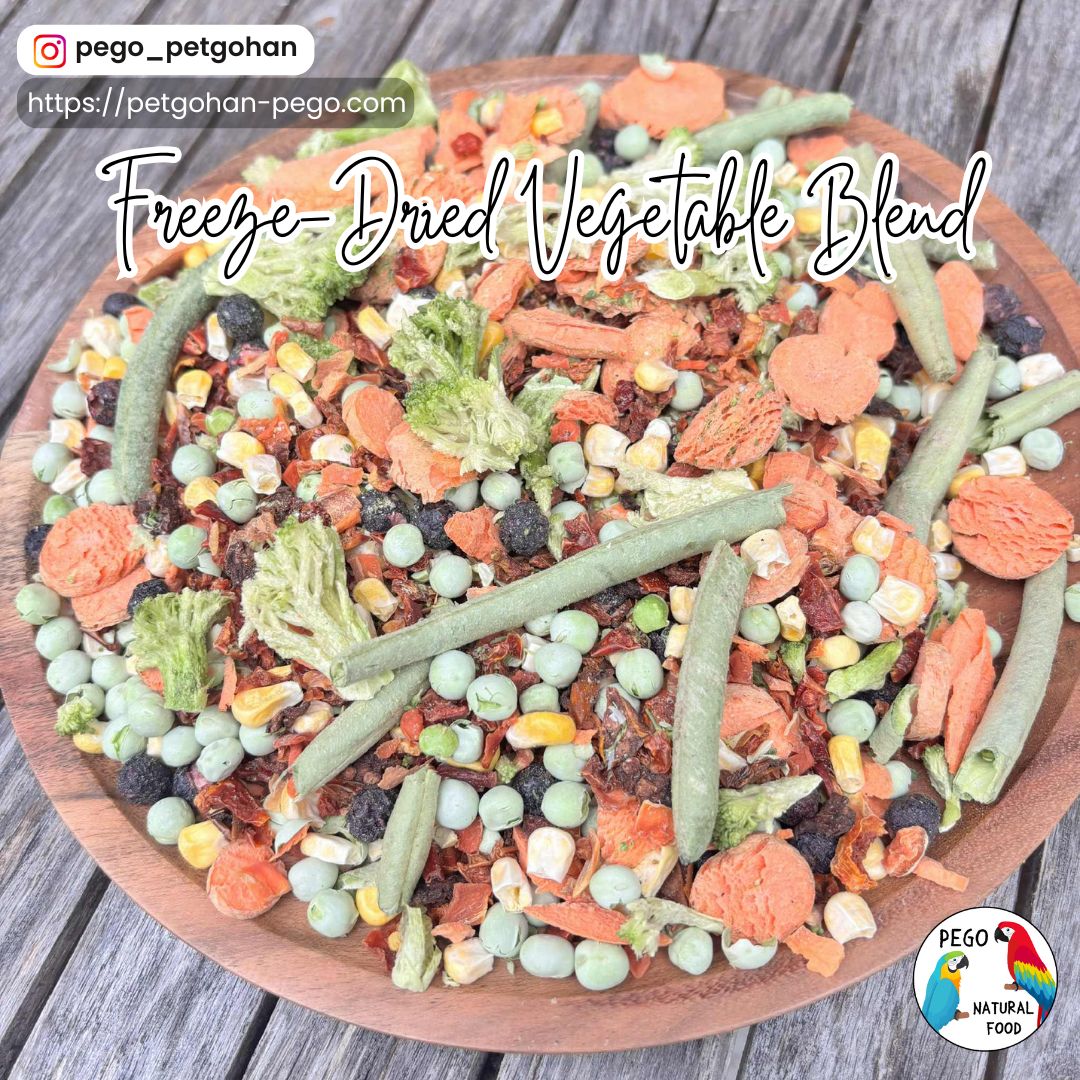
PEGO's Freeze Dried Food
含稅。
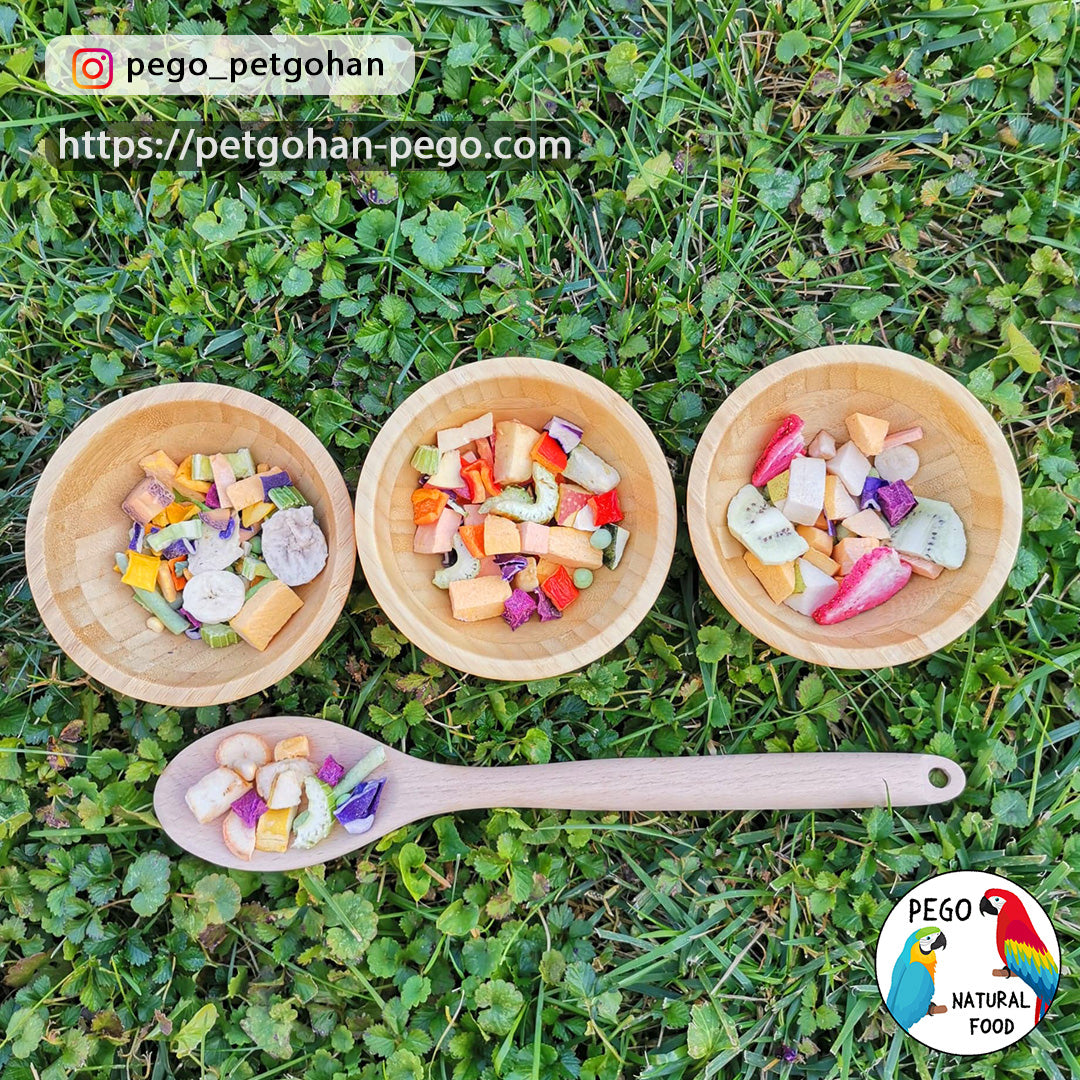
Whole foods, made easy—natural variety without the prep.
PEGO’s Freeze Dried Food is a convenient, nutrient-rich whole-food meal blend designed to bring natural variety and texture to everyday feeding.
Freeze-dried at peak freshness to preserve color, aroma, and natural structure, this mix of organic vegetables, fruits, grains, and other whole foods makes it easy to offer a balanced, visually appealing meal without lengthy prep. Its dry form supports flexible portioning and effortless meal design, helping caregivers broaden ingredient rotation and enrich feeding plans from seed-based and pellet-based diets to fully whole-food–focused routines.
This product is suitable for:
- Birds offered seed-based, pellet-based, or mixed feeding styles
- Caregivers seeking to expand whole-food rotation with minimal prep
- Feeding routines prioritizing visual variety and texture
- Daily meals with organic, pesticide-free whole foods
Product Overview
What Is Freeze-Drying?
Freeze-drying is a process in which food is frozen and then dried under vacuum, allowing ice to sublimate directly from solid to vapor. Foods made using this method are known as freeze-dried foods. This process helps retain the food’s original structure, color, and aroma without the use of additives.
Why Do We Recommend It?In the past, pellets were often recommended as up to 70% of a bird’s diet. Today, this approach is changing. Many avian professionals now suggest limiting pellets to around 30% and providing the majority of the diet as whole foods, such as vegetables, fruits, seeds, nuts, herbs, coconut, and insects.
Research and practical experience from Europe and North America have contributed to a growing shift toward whole-food–focused feeding.
However, sourcing multiple organic ingredients and preparing them daily can be time-consuming. Freeze-dried foods offer a practical way to add variety and whole-food ingredients without extensive preparation.
Freeze-drying is known to preserve approximately 95% of a food’s original nutrients. Compared to fresh produce, which is considered 100%, only a small portion is typically lost during processing.
Because freeze-drying uses very little heat and no additives, the food’s natural color, aroma, and nutritional profile are well maintained. This allows caregivers to confidently incorporate freeze-dried foods into daily feeding routines.
PalatabilityEvery bird responds differently, but many caregivers report that birds who refuse fresh vegetables will readily accept freeze-dried foods. Since birds may need time to recognize new foods, gradual introduction is recommended.
Freeze-dried foods can be offered whole, lightly moistened, or crushed into a powder to suit individual preferences. Experimenting with texture often helps birds become more comfortable with new ingredients.
Parrot Species
This blend is suitable for a wide range of bird species, including finches, small to large parrots, and more.
It is also appropriate for Eclectus parrots and Galahs (Rose-breasted Cockatoos).
Please note: Suitability for lories and lorikeets has not been confirmed, so we recommend feeding at the owner's discretion.
This product may also be given to other small animals, but please check the ingredients carefully and use your best judgment when offering it.
Feeding Instructions
For best results, we recommend lightly moistening freeze-dried food before serving. Offering it completely dry is not advised whenever possible.
Why add moisture?
Hydration support:
Freeze-dried foods are extremely dry. Adding water helps reduce the risk of dehydration and supports normal water intake during feeding.
Enzyme activity:
When whole foods are kept dry, naturally occurring enzymes remain largely inactive. Lightly moistening the food may help reawaken these enzymes, supporting more natural digestion from a nutritional perspective.
Serving freeze-dried food dry is not wrong, and eating always comes first. If you do offer it dry, please ensure your bird has access to fresh water and is drinking adequately.
What Are Whole Foods?
In bird nutrition, “whole foods” refer to ingredients that wild birds could naturally obtain in the wild, such as fresh vegetables and fruits, seeds, nuts, herbs, coconut, edible flowers, insects, and foods that are soaked or sprouted. In simple terms, these are foods you can easily recognize at a glance.
With the exception of processed products such as pellets, supplements, and bird cookies, most of these items are considered whole foods. Seeds are also classified as whole foods.
Feeding Amount


Avian experts recommend the following amounts as a general guideline:
Small parrots: 1 tablespoon
Medium parrots: 2 tablespoons
Large parrots: 3 tablespoons
Suggested routine:
In the morning, aim to offer foods with higher moisture content.
Morning: A variety of fresh, raw whole foods
Evening: Freeze-dried food
Pellets should make up no more than 30% of the total diet, or be used simply as treats.
Introduce freeze-dried food gradually into daily meals to help your bird get used to vegetables over time.
Tips:
Small birds such as finches and budgies (budgerigars) may find the original pieces too large. If so, crush them by hand, place them in a bag and press, or grind them into smaller pieces to make them easier to eat.
Our top recommendation is to soak freeze-dried food to rehydrate it before feeding.
Storage Instructions
Store at room temperature, away from heat and humidity. Once opened, use promptly; reseal the zipper closure tightly or transfer to an airtight container. For reference, our team keeps them in airtight jars from IKEA.
Ingredients
All products are non-heat freeze-dried to preserve natural nutrients
(except for rolled oats).
All ingredients, except mealworms and crickets, are USDA-certified organic, non-GMO whole foods.
Okra and fennel are not USDA-certified, but are grown without pesticides.
All vegetables and fruits are washed with baking soda prior to processing.
All ingredients are used in their whole form (whole foods).
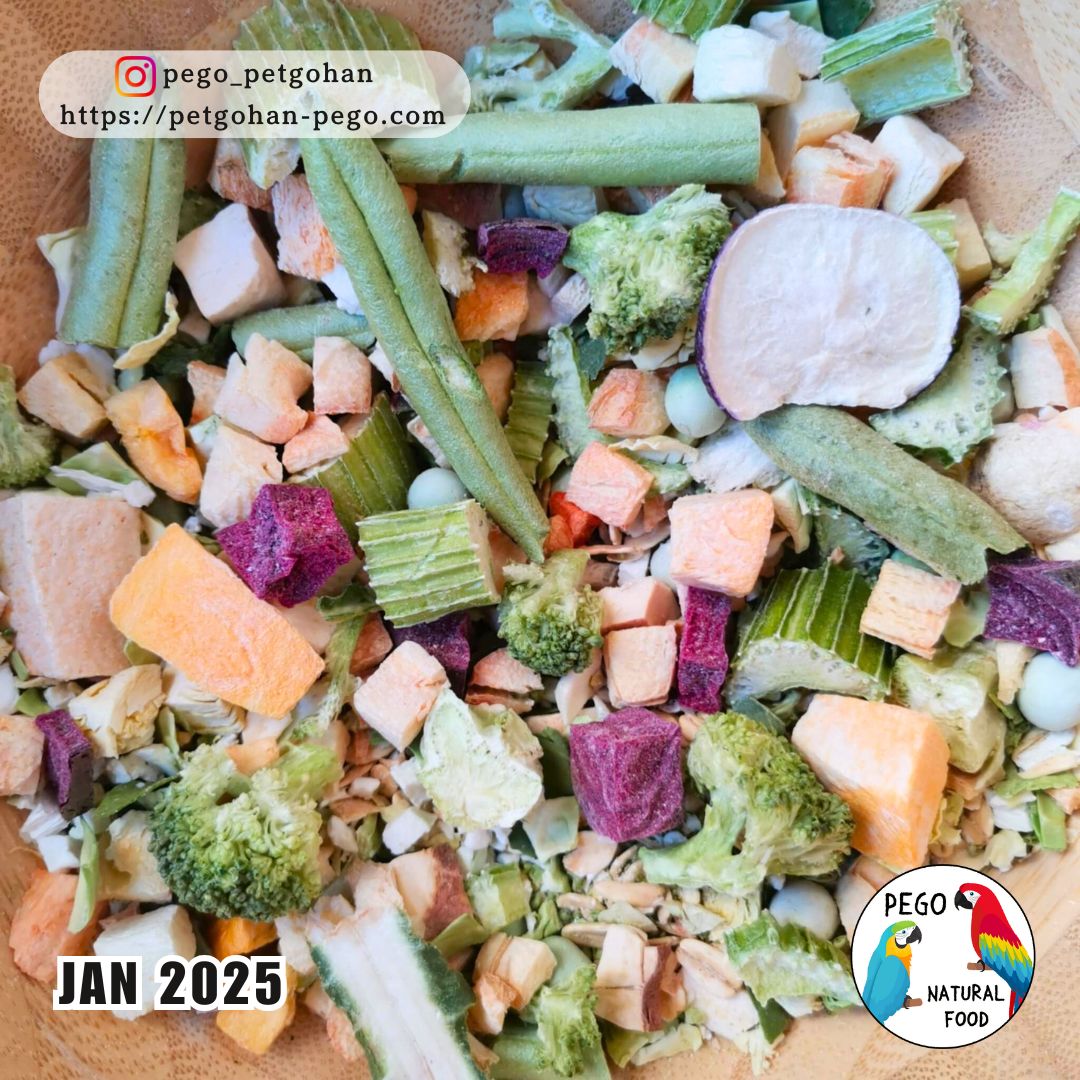
Green Blend – 50 g
Ingredients:
Baby Spinach, Baby Red Chard, Baby Green Chard, Baby Kale, Brussels Sprouts, Broccoli, Green Beans, Celery, Green Peas, Romanesco, Okra.
“Baby” refers to young leaves harvested approximately 2–4 weeks after germination.
Beta-Carotene (Vitamin A) Blend – 65–70 g
Ingredients:
Carrot, Sweet Potato, Red Bell Pepper, Orange Bell Pepper, Yellow Bell Pepper, Rainbow Chard, Broccoli, Brussels Sprouts.
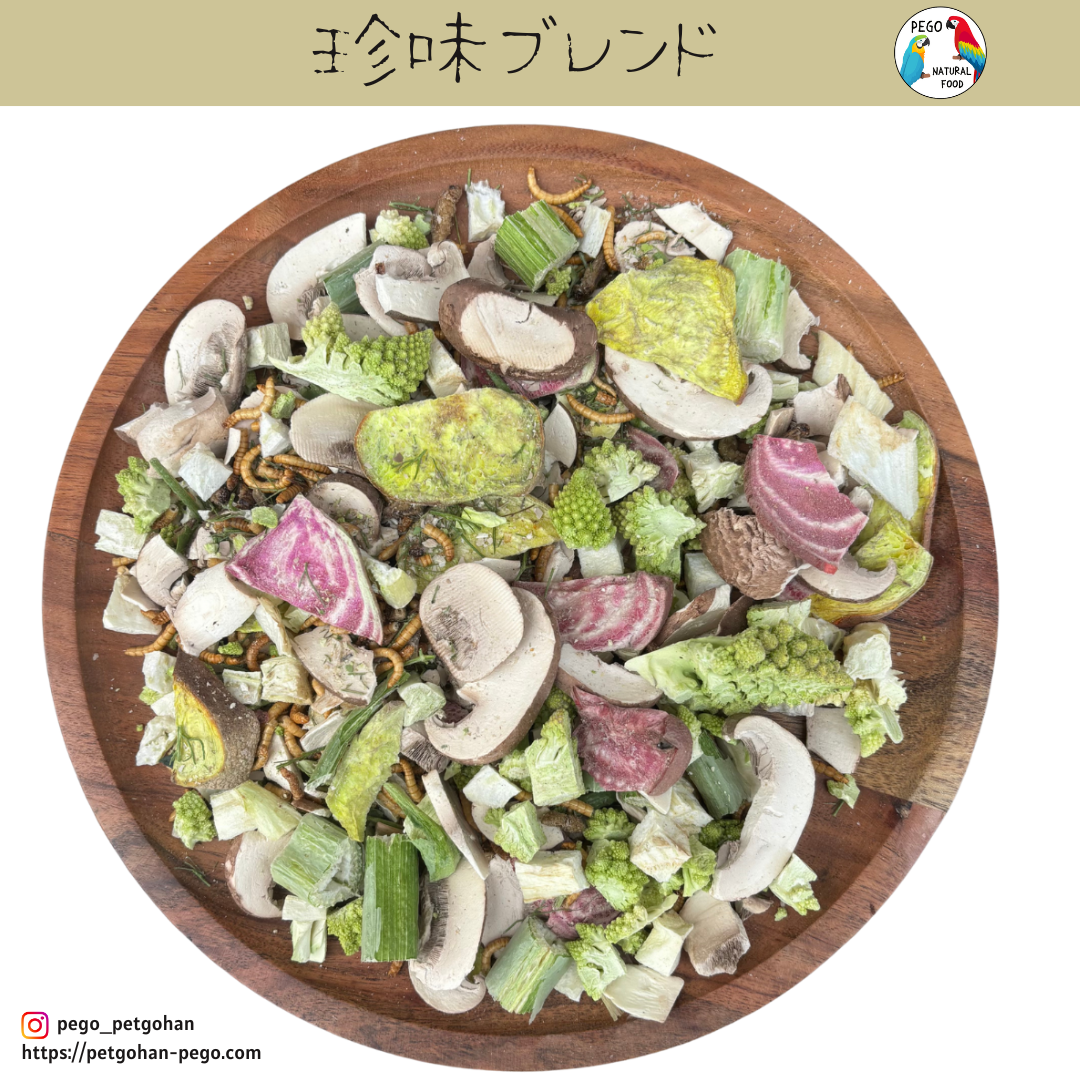
Gourmet Treat Blend – 40 g
Ingredients:
Romanesco, Chioggia Beets, Golden Beets, Fennel, Mushrooms, Mealworms, Crickets.
Molting Support Blend – 100 g
Ingredients:
Green Peas, Broccoli, Rolled Oats, Mushrooms, Carrots, Sweet Potetoes, Zucchini.
Dietary Fiber Blend – 40–45 g
Ingredients:
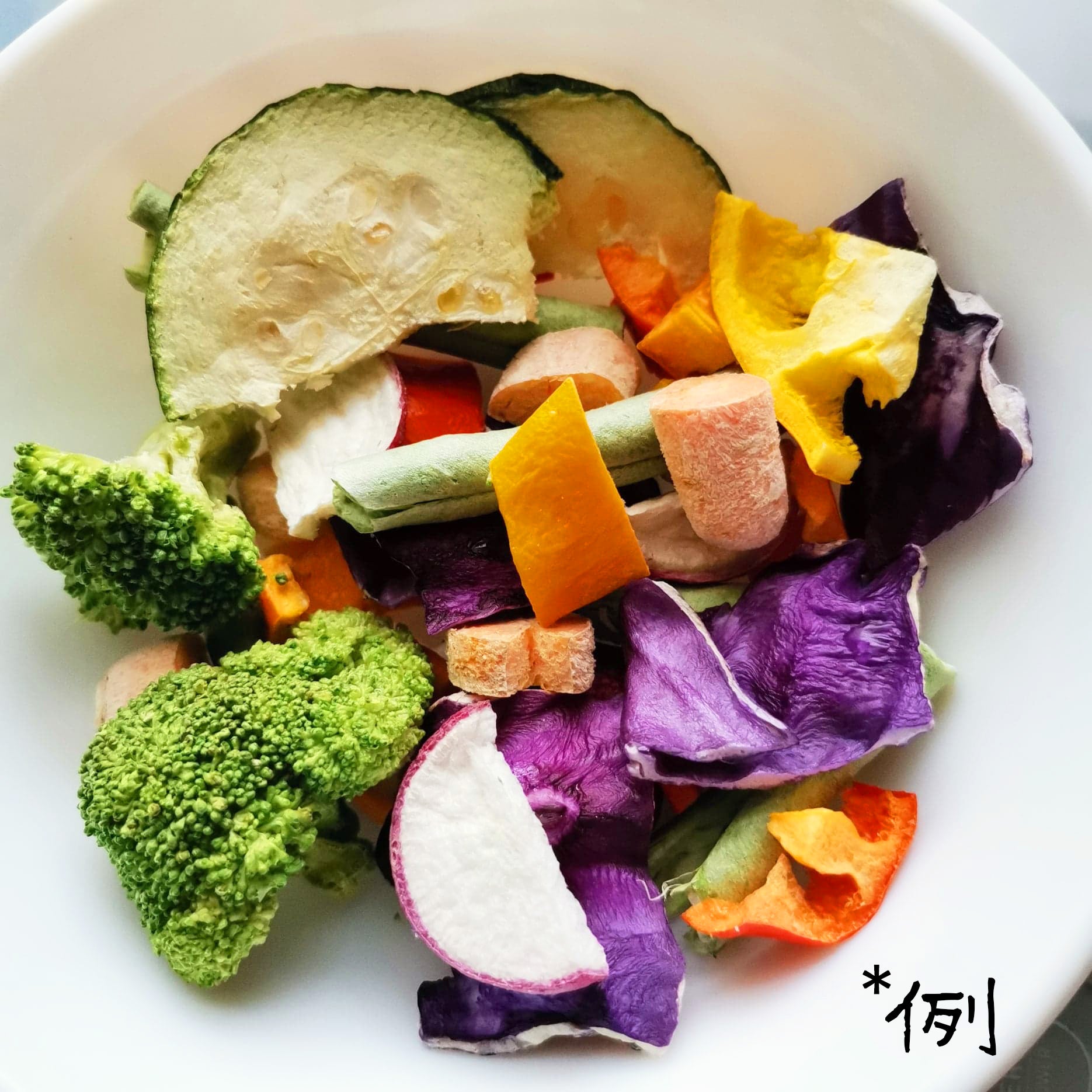
Green Beans, Carrots, Brussels Sprouts, Broccoli, Red Cabbage, Okra.
Colorful Enrichment Blend – 50–60 g
Ingredients:
Red Bell Pepper, Yellow Bell Pepper, Orange Bell Pepper, Tri-Color Carrots, Green Peas, Beets, Rainbow Chard.
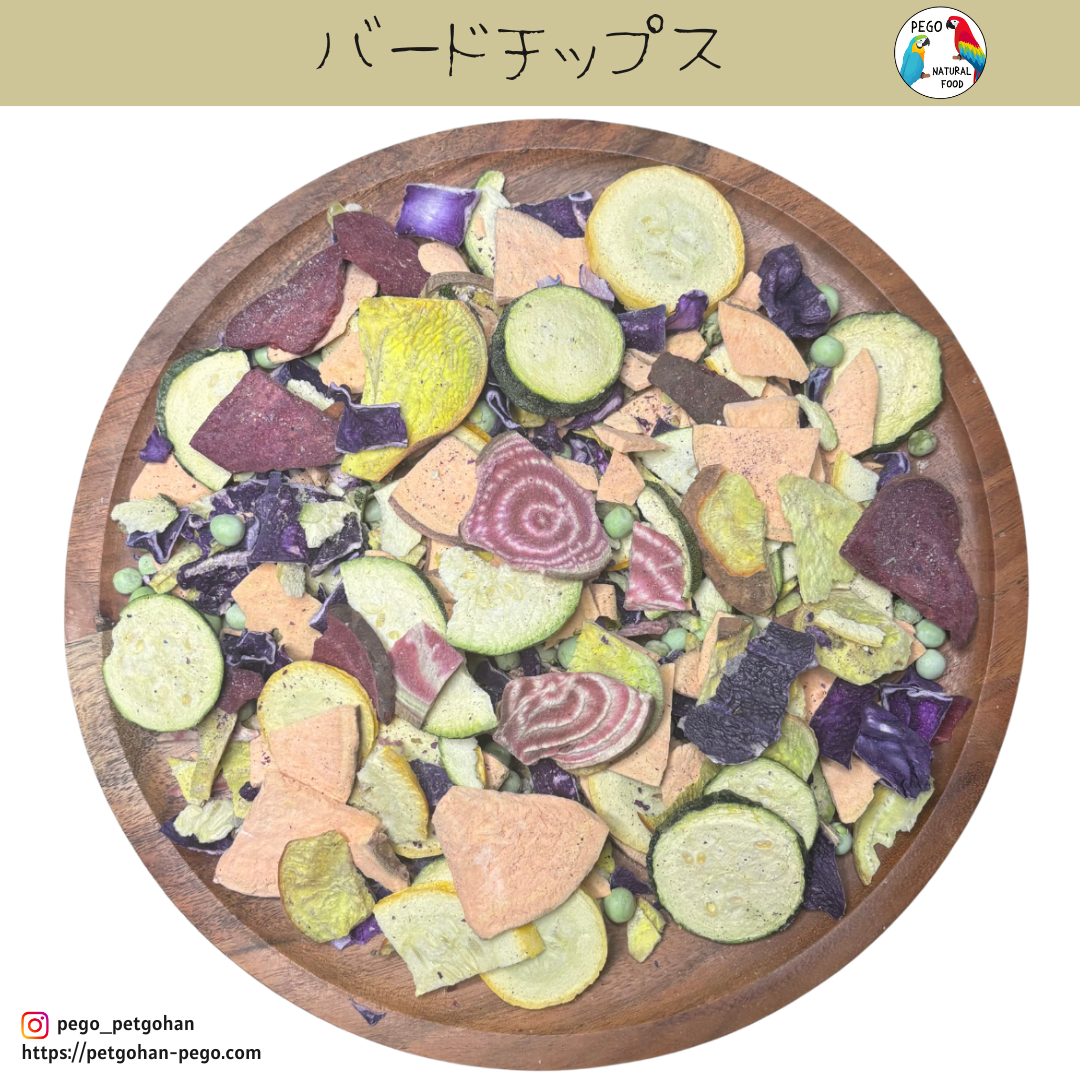
Bird Chips – 55 g
Ingredients:
Beets, Sweet Potatoes, Zucchini, Yellow Squash, Zucchine, Red Cabbage.
Value Blend – 110–120 g
Ingredients:
Dried Rolled Oats, Corn, Green Beans, Carrots, Okra.
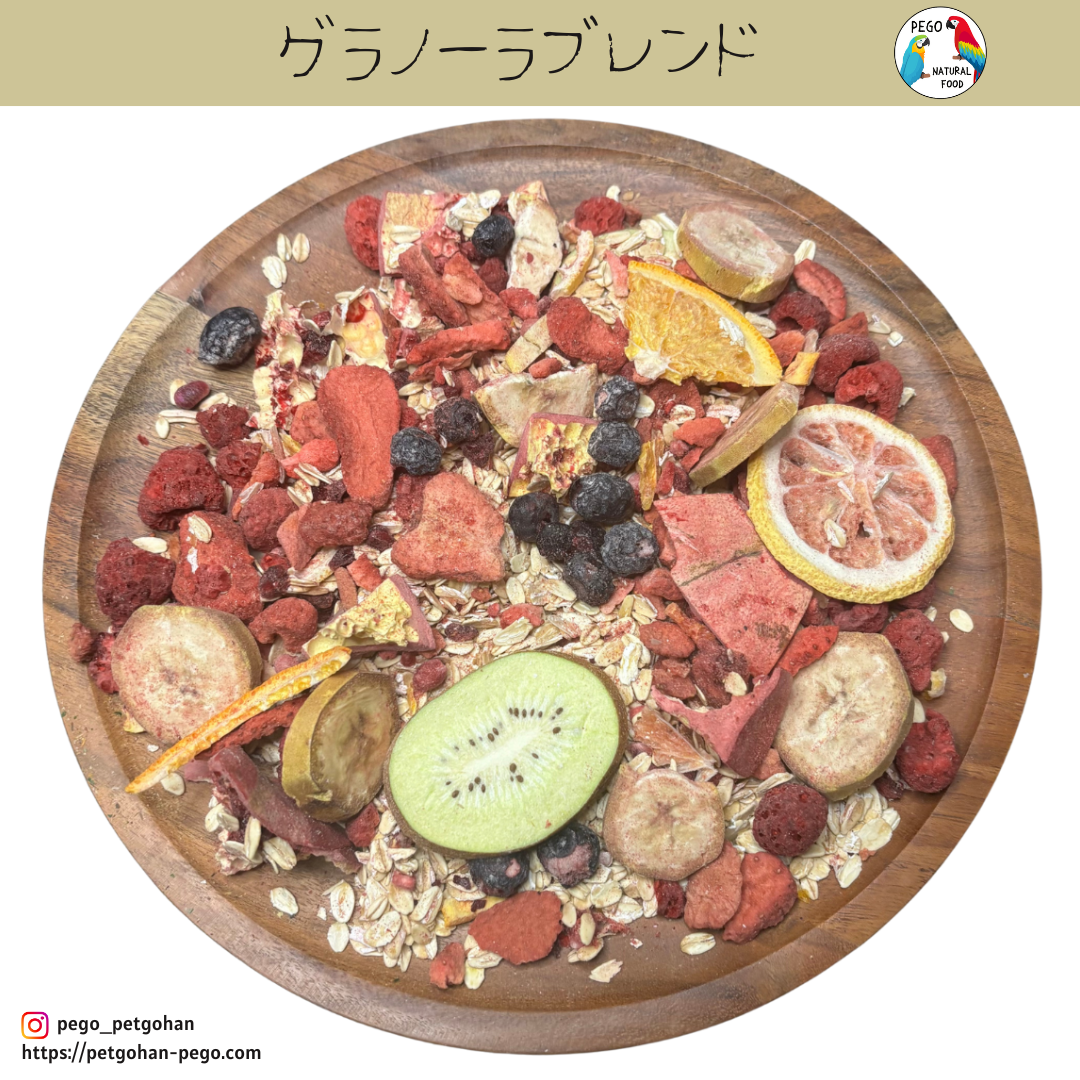
Granola Blend – 140–150 g
Ingredients:
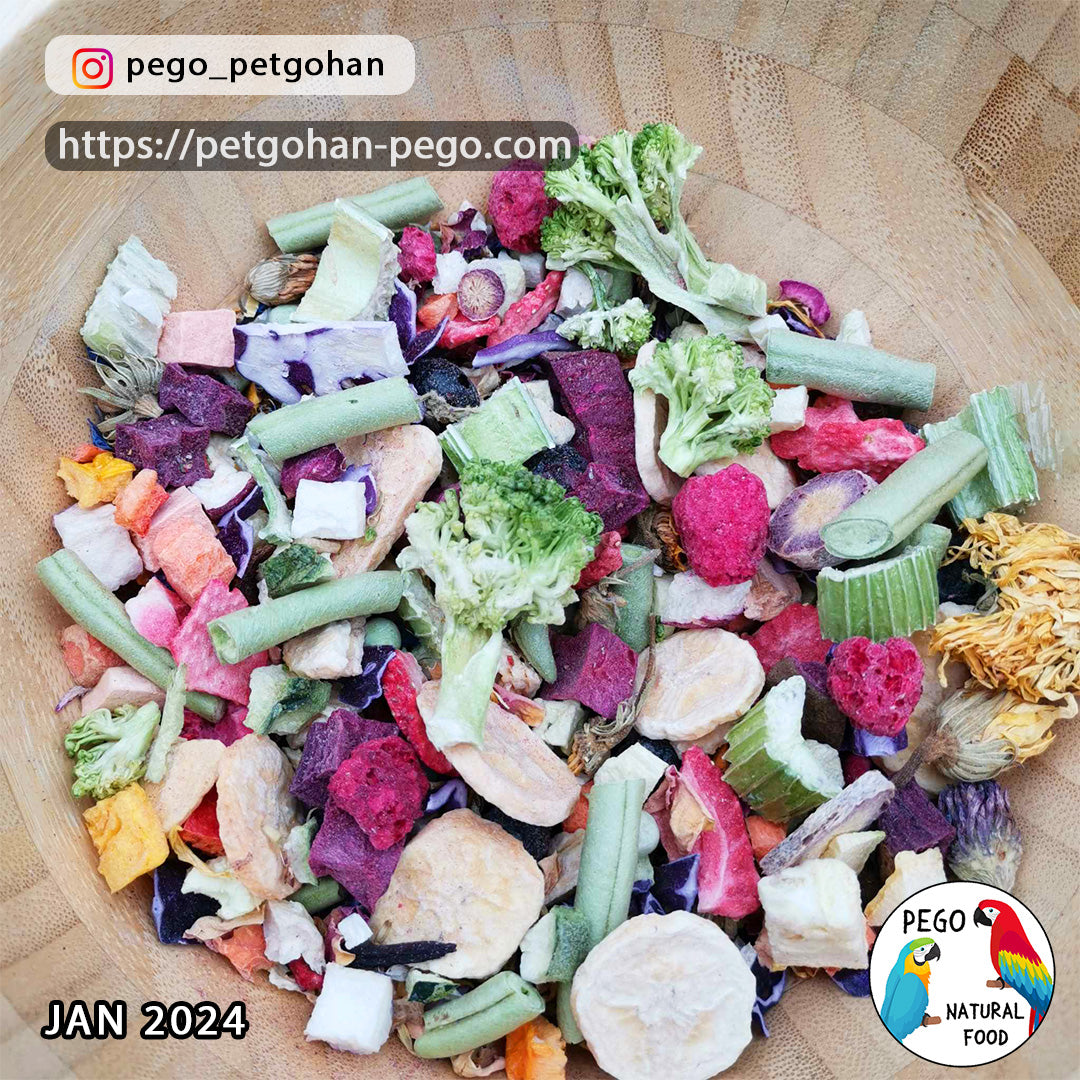
Dried Rolled Oats, Raspberries, Blueberries, Strawberries, Kiwifruit, Pomegranate, Banana, Orange, Lemon.
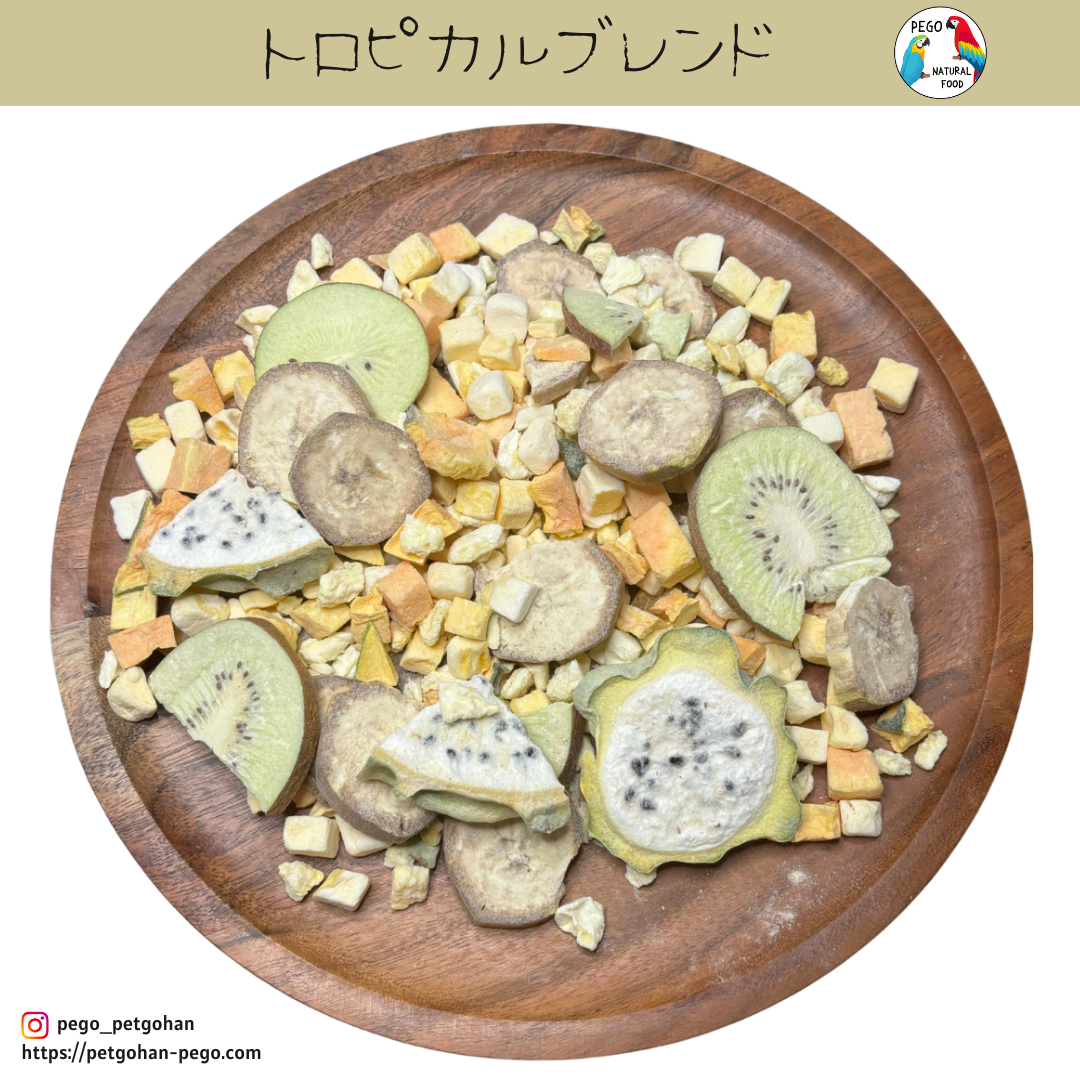
Tropical Blend – 60 g
Ingredients:
Mango, Banana, Pineapple, Dragon Fruit, Kiwifruit, Papaya.
Additional Notes
-
Seeds, stems, and peels are also included in the blends.
-
If you have concerns regarding goitrogens, oxalates, or mushrooms, please refer to our FAQ.
If you are not comfortable after reviewing the information, we recommend refraining from purchase. -
Mushrooms are sun-exposed prior to freeze-drying to encourage natural vitamin D formation.
Since this is a natural process, the exact vitamin D content cannot be quantified; however, we hope this may help birds that have limited access to sunlight, especially during winter months. -
Only bird-safe varieties of vegetables and fruits are used.
For leafy greens such as kale, we carefully select cultivars with lower progoitrin levels, based on botanical and scientific classifications.
Other leafy greens are also chosen for milder bitterness and relatively lower oxalate content.
We believe this blend reflects a very high standard of ingredient selection and quality.
Important Notice
Some ingredients (such as apples, bananas, and others) may show natural discoloration due to exposure to air during preparation.
All ingredients are freeze-dried immediately after harvest or purchase, and this discoloration does not affect quality or safety.
For this reason, returns or exchanges cannot be accepted.
Nutritional Benefit
Green Blend
- Rich in vitamins A and K to support immune health
- High in dietary fiber to help support healthy digestion
- Provides minerals that help support metabolic balance
Beta-Carotene Vitamin A Blend
- Especially high in components that support mucosal health, vision, and immunity
- Strong antioxidant properties that help support overall health
Gourmet Treat Blend
- Provides ample protein needed for feather health and body maintenance
- Contains components that help support healthy circulation
- Balanced in antioxidants and minerals
Molting Support Blend
- Provides a slow-releasing energy source to help maintain strength during molting
- Plant-based protein helps support nutritional balance
- Gentle on digestion
Dietary Fiber Blend
- Dietary fiber helps support healthy gut function
- Supports natural detoxification processes
- Antioxidant components help support overall health
Colorful Enrichment Blend
- Extremely rich in antioxidants derived from deeply colored vegetables
- Helps protect cells and reduce physical stress
Bird Chips
- Provides stable energy through slow-releasing carbohydrates
- Contains many components with anti-inflammatory properties
- Also supports hydration and mineral intake
Value Blend
- Easy to digest and gentle on the body
- Mucilaginous components help protect the intestinal tract
- Mild formulation suitable even for beginner birds
Gourmet Granola Blend
- Powerful antioxidant components help protect cells
- Provides natural carbohydrates for energy
- Vitamin C helps support immune health
Tropical Blend
- Naturally occurring enzymes help support digestion
- Rich in antioxidants that help reduce physical stress
- Provides minerals and vitamins
The information on this page regarding nutrients, benefits, and other characteristics (including commonly stated effects) is provided as general, publicly known information about each ingredient. It does not guarantee any specific effects or results of this product.
Best-By Date
Green Blend 12/2026
Beta-Carotene Vitamin A Blend 12/2026
Gourmet Treat Blend 12/2026
Molting Support Blend 12/2026
Dietary Fiber Blend 12/2026
Colorful Enrichment Blend 12/2026
Bird Chips 12/2026
Value Blend 12/2026
Granola Blend 6/2026
Tropical Blend 12/2026
FAQ
Q: Why does this sell out so quickly, and when is the next restock?
A: Due to high demand, our products often sell out within a few days of release. We received a large shipment for December. Information about future restocks will be updated regularly on this page and on our Instagram.
Q: Will the same blend be restocked?
A: No. Our blends are never restocked with the same ingredients or formulations. We prioritize dietary diversity, so the ingredients used change every time. If you find a blend you like, we recommend purchasing extra.
Q: My bird’s droppings became watery or changed color. Is that okay?
A: Watery droppings usually indicate good hydration. Foods like beets can cause red-colored droppings, while leafy greens often result in greenish droppings. These color changes reflect the foods eaten and are not a problem.
Frequent changes in droppings color are actually a sign that your bird is eating a variety of foods and getting diverse nutrients. Birds fed mainly pellets often produce firmer droppings, but according to U.S. avian veterinarians, slightly watery droppings similar to those of wild birds are considered normal and healthy.
Q: Is this blend recommended for my specific parrot species?
A: Ingredients vary with each blend. Please check the “Bird Species” and “Ingredients” sections, where we list any species for which feeding is not recommended. We do not create blends for specific species, so please choose based on balance with your bird’s regular diet. These blends are safe for all parrot species when fed appropriately.
Q: I’ve heard that certain ingredients are unsafe for parrots. Are these really okay?
A: All ingredients used in our blends are safe for parrots. This is based on peer-reviewed data, research papers, studies, and information from Western biologists, animal scientists, certified bird trainers, nutritionists, and other professionals.
If opinions differ in Japan and you feel concerned, we recommend either refraining from purchasing or verifying the reliability and evidence of the source you are referencing. We have received many inquiries about this topic over the past few years, so we are providing a detailed explanation here.
Brassica family vegetables:
This is one of the most frequently asked topics. In the past, there were concerns in Western countries as well, but these vegetables are now considered recommended foods.
In Japan, many people worry about goitrogens. However, goitrogens themselves are not harmful. Only excessive intake is problematic. There are over 100 types of goitrogens, and not all of them are harmful. While they are often feared because only the risks are discussed, goitrogens also have benefits such as antiviral, antibacterial, and immune-supporting properties.
If you are still concerned, please look at actual goitrogen levels. For example, komatsuna also contains goitrogens, yet its levels are considered safe for birds. While values vary by variety and growing conditions, some commonly consumed brassica vegetables have been reported to contain less than 10 μmol of goitrin per 100 g.
It is true that Brussels sprouts may contain higher goitrogin levels than some other brassica vegetables. However, when fed in appropriate amounts as part of a balanced diet, this is not a problem. It is unrealistic for a small parrot to eat only Brussels sprouts until its crop is full, and it would be inappropriate for large parrots to have a diet dominated by brassica vegetables alone.
When fed together with other foods in the balance described in the “Feeding Amount” section, it is very difficult for parrots to consume excessive levels of goitrogens. If you remain concerned, you may offer small amounts of kelp or spirulina alongside the diet, paying attention to appropriate serving sizes.
In the United States, reports of parrots developing thyroid issues due to goitrogen intake are said to be extremely rare. If there are many such cases reported in Japan, we would appreciate any information so we can study it further.
Reference information related to GSL is provided separately.
Mushrooms:
Mushrooms are also safe to feed to birds, and we actively recommend them. There are many reports showing that various captive bird species are observed eating mushrooms in the wild.

Previously, mushrooms were not recommended for birds in the United States as well. One explanation for this is that a warning such as “do not feed birds toxic mushrooms” was gradually distorted through word-of-mouth, with the word “toxic” being dropped, eventually spreading as the misinformation that “birds should not be fed mushrooms.” (We cannot confirm whether this is true, but it is one of several theories. Please use your own judgment.)
In Western countries today, many avian specialists and avian veterinarians recommend feeding mushrooms to birds, and mushrooms are also used in poultry feed.
As a reference, we would like to quote a statement from Christal Pollock, DVM, an avian veterinarian, published on the official Lafeber website:
“Mushrooms are occasionally included on toxic-food lists. There are a few toxic mushroom varieties, however mushrooms that can be eaten by people are also considered safe for pets.”
If you are still concerned, we recommend refraining from purchasing this product or conducting your own research.
Overseas, many bird owners and avian professionals recommend feeding mushrooms to companion birds, and there is a large body of research on their safety and health benefits in poultry studies.
All safety data for parrot diets—including pellets and supplements—are fundamentally based on poultry research.
For this reason, mushrooms cannot reasonably be treated as an exception when considering safety.
Please refer here for information on the benefits of feeding mushrooms to birds.
There are many scientifically supported opinions in Western countries that recommend feeding mushrooms to parrots, but we have not encountered scientifically supported claims stating that mushrooms should not be fed to birds.
If anyone has clear scientific evidence explaining why these ingredients are harmful to parrots, or firsthand cases in which multiple parrots experienced health issues after consuming them, we would appreciate your sharing that information.
We will report it to organizations such as Lafeber, as well as scientists and biologists, for verification.
Q: Can this product be used together with processed foods such as supplements or medications?
A: As this is a whole food product, there is generally no issue on the side of this product itself.
However, blends that contain citrus ingredients are not recommended.
If you have concerns, we recommend first contacting the manufacturer of the processed food rather than consulting a veterinarian right away.
Provide them with your bird species and the ingredient list of this product, and ask them to confirm safety and appropriate feeding amounts.
The manufacturer is the most knowledgeable source regarding their own product.
Next, share the manufacturer’s response with your regular veterinarian and make a decision tailored to your bird’s species.
This approach is the most accurate and safest.
Rather than making decisions based solely on body size, such as “small parrots,” we strongly recommend considering your individual bird species when determining compatibility or feeding amounts.
For example, Peach-faced Lovebirds and Lineolated Parakeets may have similar body weights, but their dietary habits differ, so their nutritional needs and appropriate feeding amounts cannot be the same.
Caution
The information on this page regarding nutrients, benefits, and other characteristics (including commonly stated effects) is provided as general, publicly known information about each ingredient. It does not guarantee any specific effects or results of this product.
In the United States, the Food and Drug Administration (FDA) sets maximum “defect action levels” for incidental insect matter, and those limits vary by food type and manufacturing process. Because this product uses pesticide-free ingredients and contains no additives, incidental insects may occasionally be present. Insects associated with produce or herbs (i.e., whole foods) are a natural source of animal protein and are generally not harmful to birds; however, please remove them if you prefer. Returns or exchanges cannot be accepted for issues related to incidental insects
本網站的文字由翻譯工具自動產生,可能偶有語句不夠自然,敬請見諒。